Called to Serve SVG: A Designer’s Real-World Embroidery Review
First Impressions: Quiet Strength, Not Loud Graphics
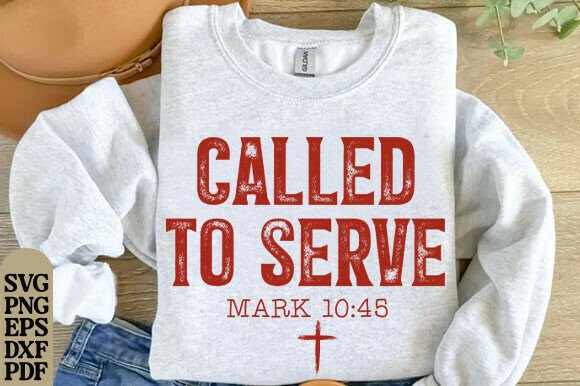
When I opened Called to Serve Svg Christian Svg, Jesus, I wasn’t met with flashy flourishes or over-rendered halos. Instead, it’s clean-lined, centered, and reverent—less “graphic tee” and more “meaningful keepsake.” The composition balances open space with intentional detail: a subtle cross motif integrated into the lettering, gentle curvature in the script, and generous letter spacing that breathes on fabric. It feels like something you’d stitch onto a nursery pillow—not because it’s childish, but because it carries weight without heaviness. That tone matters deeply when you’re building trust with customers who choose handmade faith-based products.
Where It Shines: Tote Bags, Sweatshirts & Thoughtful Gifting
I tested Called to Serve Svg Christian Svg, Jesus on a natural canvas tote, mid-weight cotton sweatshirt, and a linen tea towel—all common staples for small shop owners and Etsy sellers. On the tote? Crisp, legible, and warm—especially in navy thread on oat-colored fabric. The design scaled beautifully without losing clarity, and the moderate stitch density kept the fabric from puckering. On the sweatshirt, it held up across shoulder seams and ribbed cuffs, thanks to its balanced layout and lack of ultra-thin serifs or micro-details. As a holiday embroidery piece for a baby blanket or baptismal gift? It reads softly, respectfully, and timelessly—no trendy fonts or dated clipart energy. That’s rare in the T-Shirt Designs category, where many Christian-themed files lean too literal or too decorative for real-life wearability.
Real Case: Prepping a Boutique Apron Line
Last month, I used Called to Serve Svg Christian Svg, Jesus as the centerpiece for a small batch of chef-style aprons for a local kitchen boutique. We stitched it just above the pocket in charcoal gray thread on ivory linen-cotton blend. Customers responded immediately—not just to the message, but to how *crafted* it looked. The satin stitch in the cross element caught light gently; the fill stitch in the main phrase stayed even and plush, not stiff or pixelated. It didn’t scream “embroidered,” but it whispered “made with care.” That distinction is everything when your buyers are choosing between mass-printed and handmade product.
Where to Proceed With Care
This isn’t a one-size-fits-all embroidery file—and that’s honest, not limiting. Avoid using Called to Serve Svg Christian Svg, Jesus on stretchy knits (like lightweight t-shirts) without proper cutaway stabilizer and careful hooping. The clean lines can blur if the fabric shifts under tension. Tiny hoops (< 4”) will compress the letter spacing and mute the cross detail—so verify your minimum hoop size before digitizing or purchasing. On dark fabric, test contrast with off-white or ecru thread first; some versions of this design rely on subtle tonal variation rather than stark contrast. And while it works well on flat surfaces like towels or pillow covers, skip curved cap fronts unless you’ve confirmed the design has been optimized for that distortion—or better yet, re-digitize key elements for fit.
What It Adds (and Doesn’t Add) to Your Craft Business
Called to Serve Svg Christian Svg, Jesus elevates perceived value without demanding premium pricing. It reads professional, not DIY—so your Etsy listings gain credibility, your craft fair table looks curated, and your wholesale partners see consistency. Customers recognize sincerity in restraint: no glitter effects, no layered shadows, no forced cutesiness. That builds trust, especially for personalized gifts where sentiment outweighs trend. But it won’t carry a full collection alone. Pair it with simple botanical borders or minimalist cross motifs—not competing scripts—to build cohesive design assets for your shop. And remember: as a machine embroidery design, its strength lies in clarity and adaptability—not complexity. Don’t expect dense fill areas or intricate applique layers unless explicitly stated in the product specs.
Practical Designer Notes Before You Stitch
- Always run a test on scrap fabric matching your final project’s weight and texture—especially for baby embroidery or embroidered patch applications.
- Check thread color contrast on both light and dark fabric backgrounds using a printable mockup before committing to bulk production.
- Review stitch density: if it feels heavy on your sample, reduce density slightly in your embroidery software—this helps with wash durability and softness.
- Use appropriate stabilizer: tear-away for stable wovens, cutaway for knits or textured fabrics like terry cloth or fleece.
- Inspect small details—like the tip of the cross or inner curves—under magnification to ensure they’ll resolve cleanly at your intended size.
- Confirm licensing terms before selling finished items or bundling the digital embroidery file with other craft business resources.
- For commercial embroidery, double-check whether the file includes multiple sizes or requires manual scaling—some versions optimize best at 3.5”–4.5”, others hold up to 6” with minimal loss.
Final Thought: A Design That Serves Its Purpose
Called to Serve Svg Christian Svg, Jesus doesn’t try to be everything. It’s not a flashy social media graphic or a dense monogram. It’s a quiet, confident anchor—ideal for custom apparel that honors intention over impulse, for personalized gifts that land emotionally, and for small shop merchandise that reflects thoughtful curation. If you’re an embroidery designer, Etsy seller, or creative entrepreneur building a brand rooted in authenticity—not algorithm-chasing—it’s worth your time. Just stitch it right, pair it wisely, and let the message speak for itself.